


Day 18 - KWM 2025 This Is Still Not An Advent Calendar
Posted on December 18, 2025
by Evan
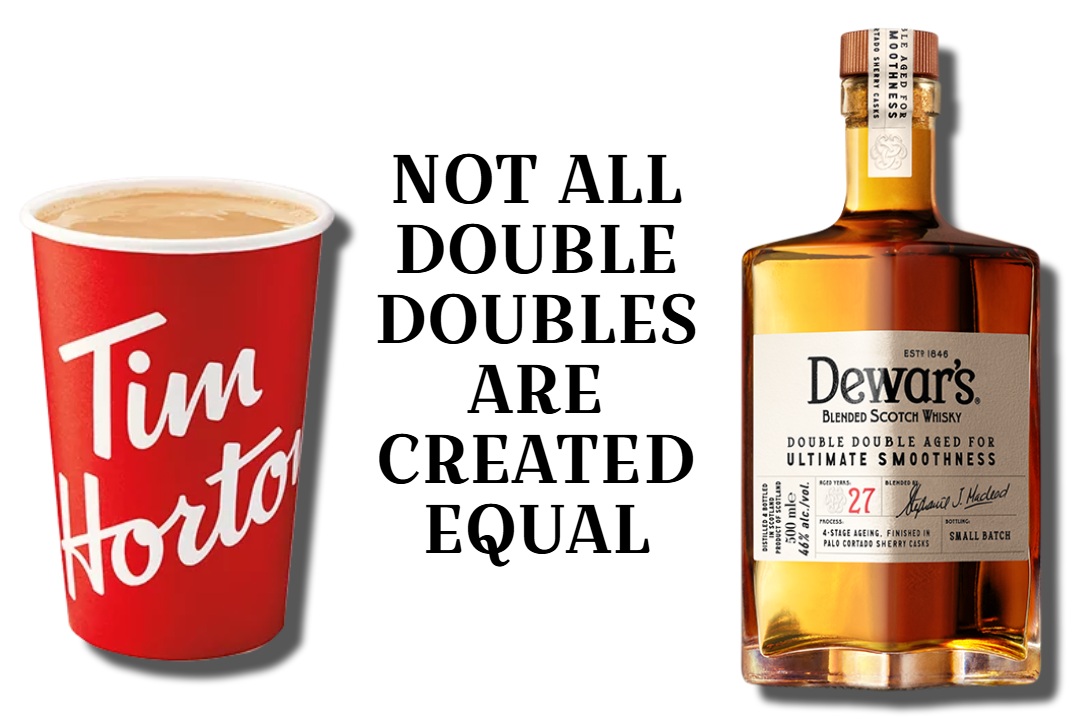
Move over, Tim Hortons – there is a new Double Double in town!
If you name your Blended Scotch “Double Double”, it is pretty apparent that you are trying to corner the Canadian market. That is exactly what Dewar’s has done with this Blended Scotch Whisky range. Featuring 21, 27, and 32 year old versions, all available in cute little 375ml bottles with an unfortunately silly amount of extra packaging around them, the Double Double series has been quite popular over the past few years.
We don’t focus on Blended Scotch as much as the rest of the world seems to. You know, beyond being big fans of Compass Box, and anything that Walter is deems worth promoting. However, the Dewar's brand has been going through a bit of a renaissance with this Double Double lineup and a few other releases, and they have one of the most celebrated Master Blenders in charge of what they do.
Stephanie MacLeod is the woman behind the Dewar’s line of Blended Scotch Whisky. She has been a Master Blender with Dewar’s and parent company Bacardi since 2006. She was awarded the International Whisky Competition’s Master Blender of the Year Award in 2019, making her the first female Master Blender to do so.
Then she won it again in 2020.
And 2021, 2022, 2023, and for the sixth consecutive year in 2024. They were probably looking at changing its name to the Stephanie MacLeod Award at this point. Just this year, the IWC finally honoured somebody else with the Master Blender Of The Year award. It was presented to the also highly respected Drew Mayville of Sazerac/Buffalo Trace fame this time around.
Good to see that the IWC isn’t sexist, at least.
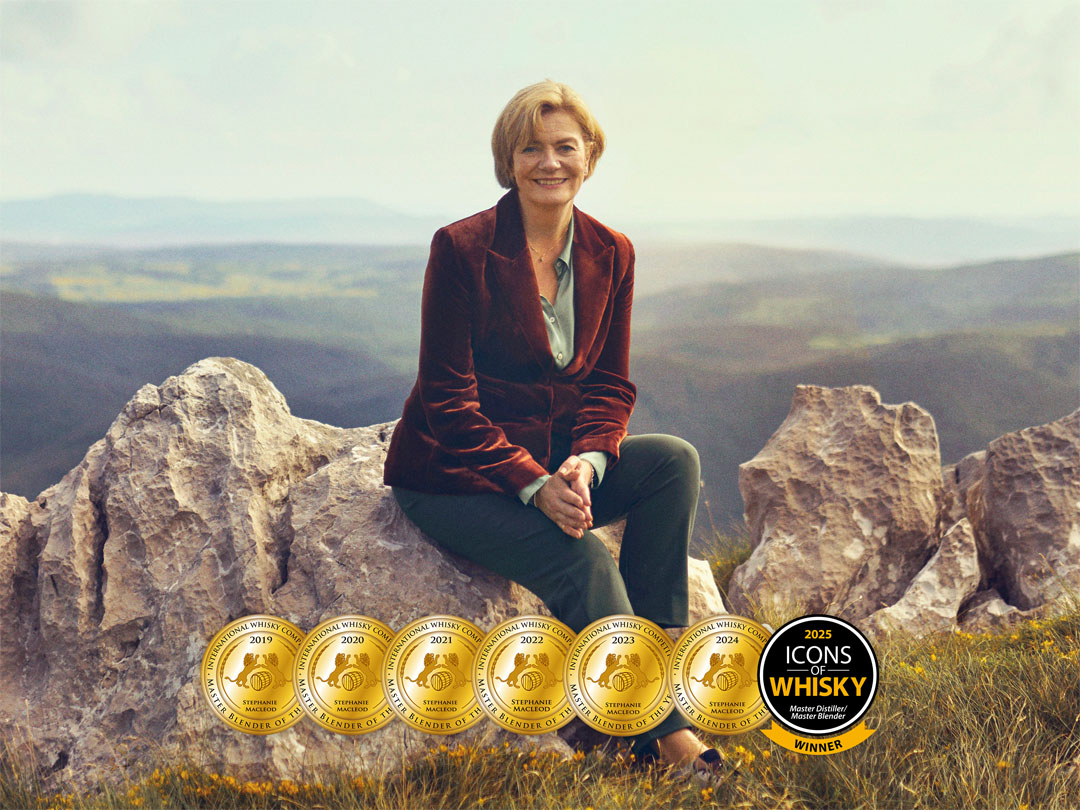
The great Stephanie MacLeod
Beyond her title of Director of Blending at Bacardi/Dewar’s, Stephanie is also Malt Master for the company’s five Single Malt Scotch distilleries. These are Aberfeldy, Aultmore, Craigellachie, Royal Brackla and Macduff (which is bottled as The Deveron).
Dewar’s was established by John Dewar in 1846. It started, essentially, as a liquor store. John sold wine and spirits at the shop with his surname on it, which resided in Perth, Scotland. Eventually, he started blending his own whiskies and selling them at the store. This was something many grocers did at the time, procuring casks and then creating their own house blends that they sold at their establishments. The Johnnie Walker brand’s own humble beginnings started much the same way.
It was John Dewar’s sons that really established and cemented the brand, though. John Dewar Sr. passed away in 1880, but the company continued with two of his sons at the helm. John Alexander Dewar – or John Dewar Jr. – mostly stayed in the UK, in charge of the stock and blending and eventually founding Aberfeldy Distillery, which was built on the site of a brewery in 1896. The distillery became the key malt that Dewar’s blends were built around. John Jr.’s brother Thomas – who mostly went by Tommy Dewar – ended up being a travelling salesman and marketing savant. Tommy spread word and sales of the Dewar’s whisky brands around the globe in his travels. So, John Dewar Jr. built the company by making the whisky, and Tommy built the company by selling it.
John Dewar & Sons survived the Pattison debacle and the whisky crash at the turn of the 1900s, and in 1915, the company merged with whisky blending company James Buchanan to become Buchanan-Dewar's. In 1925, at the midway point of the American Prohibition, Buchanan-Dewar's merged with Distiller’s Company Ltd., known as DCL. At around the same time, DCL merged with John Walker & Son, creating a massive blending behemoth which was responsible for many of the top distilleries and Blended Whisky makers in Scotland.
From 1925 until 1998, the Dewar’s brand was owned by DCL and then Grand Metropolitan when DCL merged with Guinness. Grand Metropolitan acquired even more labels and distilleries, was partially broken up and became Diageo, John Dewar & Sons was on of the portions split off. In 1998 the Dewar’s Brand was acquired by rum giant Bacardi. Along with Dewar’s, Bacardi acquired the Aberfeldy Distillery which is the spiritual home of the Dewar’s brand at the same time, as well as Craigellachie, Aultmore, and Royal Brackla. Oh, and the Bombay Gin brand. Bacardi already owned the Macduff distillery at the time.
 Why is this lineup of Blended Scotch known as the Double Double range? The term Double Double refers to Dewar’s four step process in maturing the whisky in the series:
- The components are distilled, then matured separately.
- After this, the malts are selected for blending, married together and then further matured in cask. The same thing happens with the grain whisky portion of the blend.
- After the malt and grain portion the blend are matured together separately, they are then married together, then put back into cask and matured once more.
- At this final stage, the already matured together Blend is transferred into sherry seasoned casks for another period of maturation.
Quite the lengthy process. It could be just marketing, but these do not seem to be blends that were put together in a lab one week and then bottled and put on shelves for sale the next.
The Dewar’s Double Double range has three mainstay’s in the lineup, with each one finished in a different type of sherry cask. The 21 Year Old is finished in ex-Oloroso Sherry Casks. The 32 Year Old is finished in ex-Pedro Ximinez Sherry Casks. This 27 Year Old that we will be tasting today was finished in ex-Palo Cortado Sherry Casks.
Now - shall we roll up the rim to win?
I mean should we try out this dram?
Dewar's Double Double 27 Year Old Blended Scotch Whisky – 46%
The middle child in the Dewar's Double Aged collection, this 27-year-old is maybe the sleeper in the range: its older sibling gets a lot of attention for the higher age statement, and it's younger sibling garners love for price point. The 27-year-old is where you should really be looking for quality/price ratio. This whisky is a banger! Dewar's has told us that this has "been aged, blended together, aged again, then finished in sherry casks." This time, however, those finishing vessels were ex-Palo Cortado!
Evan’s Tasting Note
Nose: Wood spice, drying tobacco leaf, and burlap sacks followed by roasted hazelnuts, light roast coffee beans, peach cobbler, tiramisu, and Rooibos tea.
Palate: More peach notes along with baked apples and touches of drying nutmeg. Rasins in milk chocolate, roasted almonds, Nutella, peaches and cream, and a drizzle of toffee.
Finish: Nutty with hints off toffee and pralines and light cinnamon on the fade.
Comment: Tasty stuff! I hate to complain about 46%, but I would love to see this at 52% or even cask strength. It is smooth, there is plenty to keep me interested, but at this strength the 375ml bottle will be gone in no time flat.
Double Double might refer to the number of bottles you need to purchase for this one!
Cheers,
Evan
This entry was posted in Whisky, Tastings, Whisky Calendars, Tastings - Online Tasting, KWM 2025 Still Not An Advent Calendar Tastings
Recent Posts
- Day 25 - KWM 2025 This Is Still Not An Advent Calendar
- Day 24 - KWM 2025 This Is Still Not An Advent Calendar
- Day 23 - KWM 2025 This Is Still Not An Advent Calendar
- Day 22 - KWM 2025 This Is Still Not An Advent Calendar
- Day 21 - KWM 2025 This Is Still Not An Advent Calendar
- Day 20 - KWM 2025 This Is Still Not An Advent Calendar
- Day 19 - KWM 2025 This Is Still Not An Advent Calendar
- Day 18 - KWM 2025 This Is Still Not An Advent Calendar
- Day 17 - KWM 2025 This Is Still Not An Advent Calendar
- Day 16 - KWM 2025 This Is Still Not An Advent Calendar