
Newsletter
Sign up for our newsletter for information on our latest products and promotions.
Sign up for our newsletter for information on our latest products and promotions.

Please confirm that you are of legal age
to purchase alcohol in your region.
You currently have an active checkout session
open already, would you like to clear it?


1257 Kensington Road NW
1 (403) 283-8000 / atyourservice@kensingtonwinemarket.com
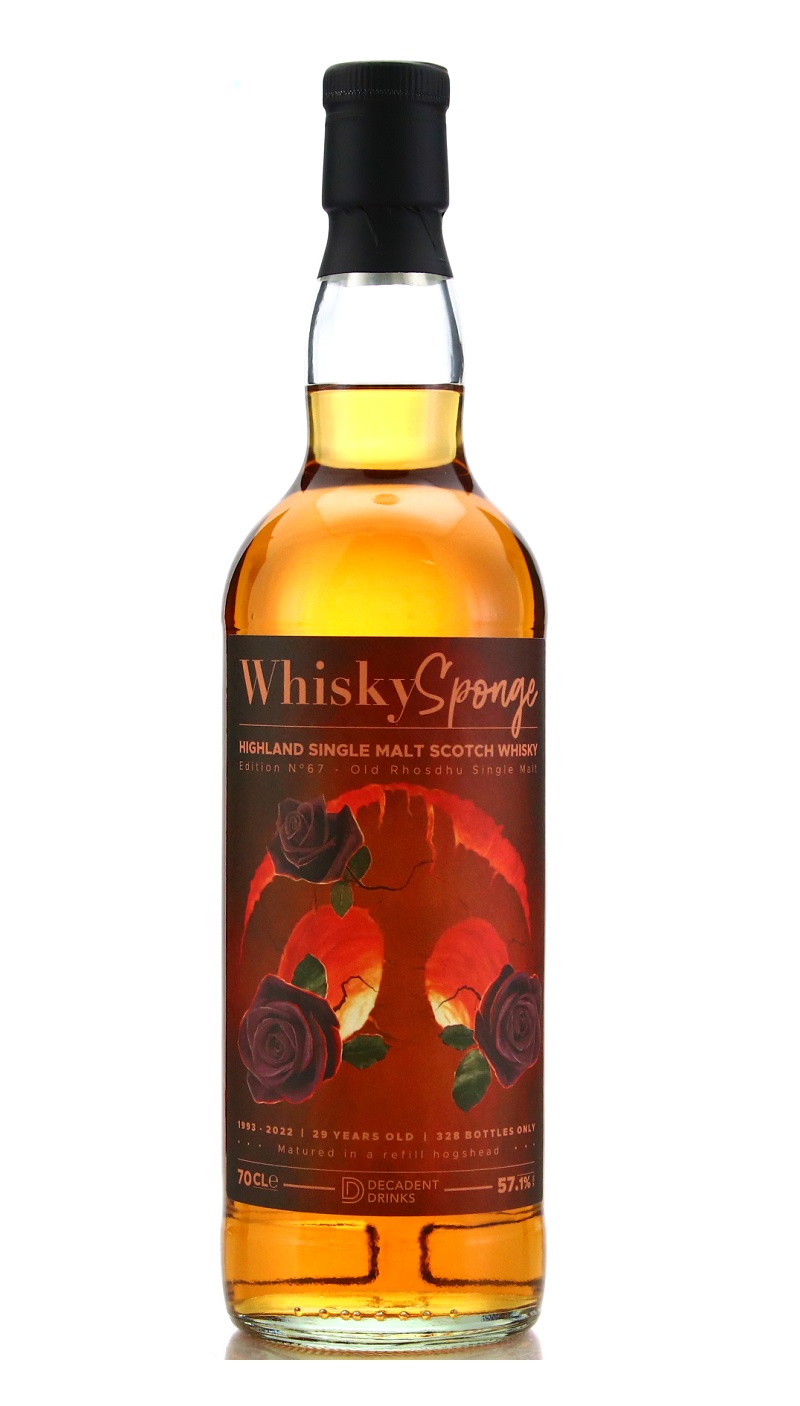
Distilled at the Loch Lomond Distillery, this 29 year old, Old Rhosdhu, was matured in a Refill Hogsheads before bottling at 57.1%.
Producer Note
"Step into the petrified brain of the Sponge, from which only Old Rhosdhu can grow... Or in this case, specifically, a 1993 refill hogshead of Old Rhosdhu, distilled at Loch Lomond distillery in their famously confusing still room. It was aged for 29 years (almost 30 dammit!) and bottled with around 2 degrees reduction to 57.1% (100° proof in Brexlish). We deliberately did this because it made everything just that bit more fruity and exotic, and as you very well know, Old Rhosdhu is all about weird, pulpy, overripe, gungy, funky exotic fruits all smooshed up into a slurry and aged in a damp hessian sack with a fistful of mottled old thruppeny bits. The kind of fruits you wouldn't dream of putting anywhere near your mouth in real, physical life, but in whisky form are actually scrumdiddlyumptious. Anyway, we sent a LOT of emails to make this whisky get into glass bottles and eventually into a storage location from which we can facilitate its dispatch to YOU, our noble and coveted consumer. As such we hope you enjoy this luscious fluid. Please buy generously."
700 mlOriginally written by Evan in blog posts for our 2019 and 2020 KWM Whisky Calendars.

Founded in 1965, Loch Lomond is a bizarre operation that is capable of making multiple different styles of spirit all under one roof. It is capable of producing Single Malt, Single Grain, and Blended Whisky entirely at one site. It can and does do this, and it also makes Single Malt in and a wide variety of styles, including both peated and unpeated types.
There are a total of thirteen stills within the Loch Lomond Distillery; however, they are definitely not all the same. Included in this number are your typical swan-neck style pot stills: the type you see at most Scottish distilleries that make single malt whisky. Beyond that though, things get weird. There are also three pairs of straight-neck pot stills, which are sometimes called Lomond stills. One of these pairs has a water cooling system installed on the top of the still that the heated vapour hits before going through the narrowing neck/pipe for collection. This results in much more reflux and leads to a lighter, softer, fruitier spirit being produced.
Finally, there is a six-story Coffey/column still that is actually split in two to accommodate the three-story building it resides in. This still is used to distill malted barley, but due to SWA regulations it still must be called Single Grain spirit in style
With this unusual combination, Loch Lomond Distillery is capable of producing its own blended whisky entirely on-site, without having to source whisky from other distilleries. It is one of the very few (possibly only) active distilleries to be able to do this.
In all, Loch Lomond makes ELEVEN different styles of spirit on a regular basis. For official bottlings, it currently focuses on three styles for regular releases. We are going to taste one of them today. Another point worth mentioning that goes along with this: Loch Lomond also uses a total of three different types of yeast in fermenting the malt. The yeast used is selected based on the style they are looking to create. They of course use a Distiller’s Yeast, which does have different strains but is typically meant to be high yield when it comes to converting sugars to alcohol in the mash. The other two yeasts used are actually meant for wine fermentation though, including one typically used for Chardonnay grapes. The bottom line for all of this is that no matter how strange you think Loch Lomond might be, they have found even more ways to be confounding that we probably don’t even know about yet.
.jpg)
Above: A picture cribbed from Loch Lomond Distillery's website showing a distiller peering into the spirit safe and trying to remember exactly which style of whisky they were producing that day.
The Inchmurrin style made by the distillery is named after the largest island within the Loch itself. At 120 hectares in size, it is the largest freshwater island in the British Isles. The Isle of Inchmurrin – or Mirin’s Island – is named after St Mirin. A monastery built on the island in the seventh century held a chapel dedicated to the Saint, though only ruins now remain.
Inchmurrin bottlings are typically created from whisky produced using straight-necked Lomond stills. They are typified by a light and fruit-forward style in comparison to the fuller-bodied, spicy and lightly peated Loch Lomond and heavily peated Inchmoan releases.
The Inchmurrin style is named after the largest island within the Loch itself. At 120 hectares in size, it is the largest freshwater island in the British Isles. The Isle of Inchmurrin – or Mirin’s Island – is named after St Mirin. A monastery built on the island in the seventh century held a chapel dedicated to the Saint, though only ruins now remain.
The name Inchmoan comes from an Island in the freshwater Loch Lomond. It is low-lying and contains marsh areas, woods, and grassland. It was once a source of peat fuel for the nearby village of Luss. It is currently privately owned, but parts of the small island are used by campers and as a picnic area.