
Newsletter
Sign up for our newsletter for information on our latest products and promotions.
Sign up for our newsletter for information on our latest products and promotions.

Please confirm that you are of legal age
to purchase alcohol in your region.
You currently have an active checkout session
open already, would you like to clear it?


1257 Kensington Road NW
1 (403) 283-8000 / atyourservice@kensingtonwinemarket.com
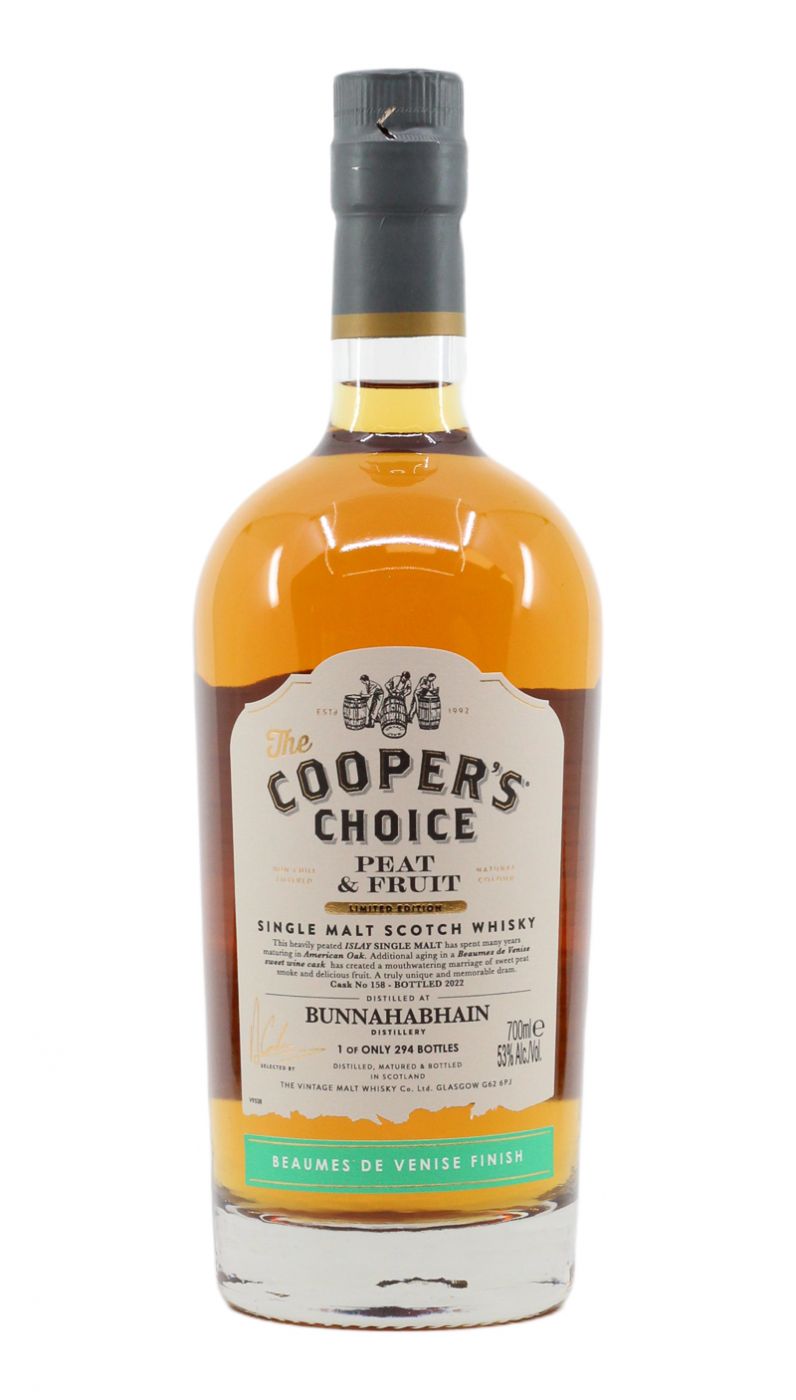
Young(ish) peated Bunnahabhain that spent a chunk of its life in ex-Bourbon before being reracked into ex-Beaumes de Venise casks. I don't think think we've ever seen anything quite like this one. Only 294 bottles.
Natural colour, non-chill filtered and bottled at 53% abv.
700ml mlProducer Tasting Note:
Nose: Rich peat smoke, grape skins and old leather.
Palate: Soot and tar. Bacon and black fruit with delicious liquid smoke. Juicy sweet malt. Mouth coating.
Finish: Fantastic length. Peat ash and fruit.
Originally written by Evan for a blog post relating to KWM's 2020 Whisky Calendar.
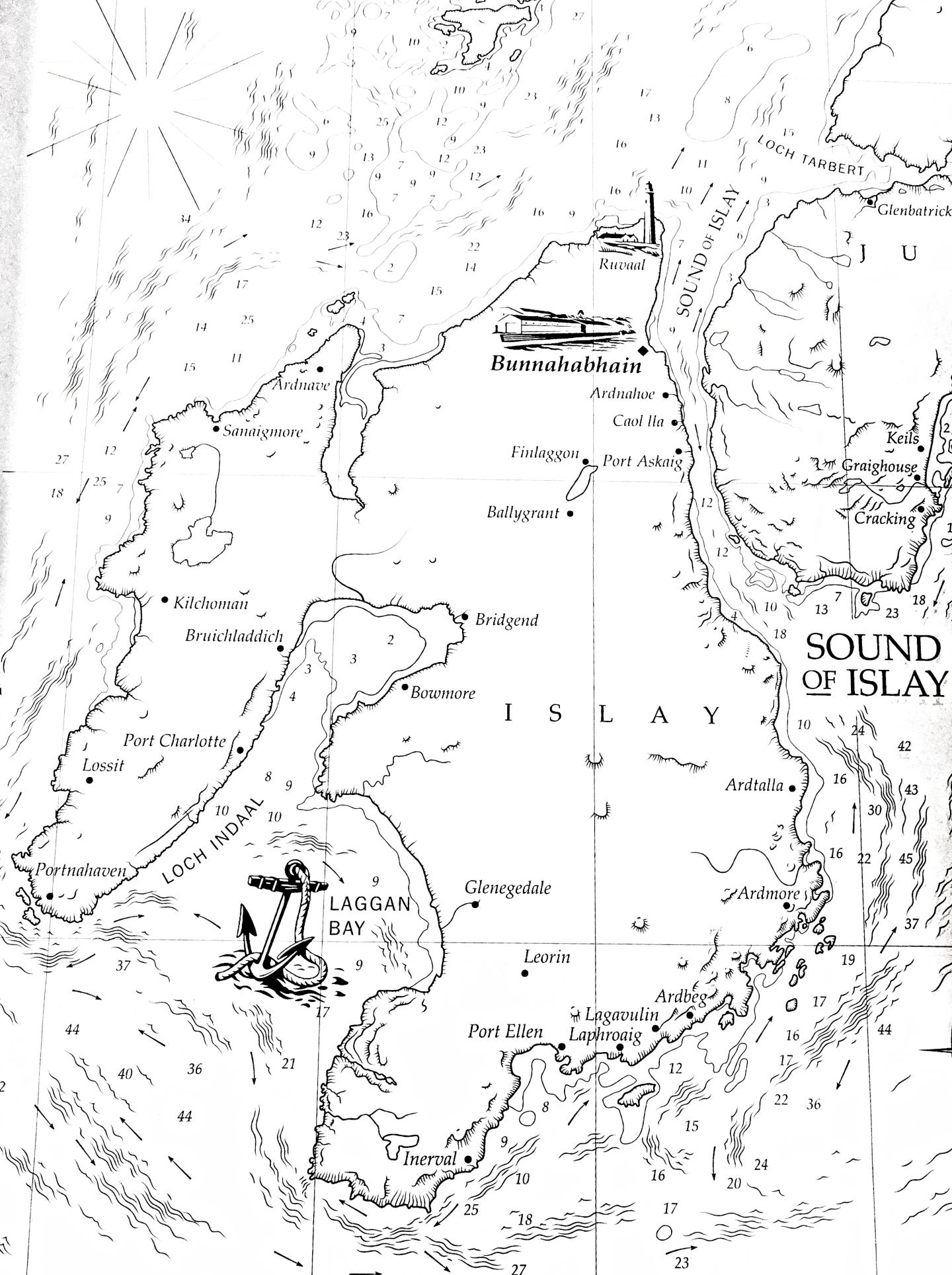
Bunnahabhain Distillery is the northernmost distillery on Islay – it lays off the beaten path and is somewhat remote even when compared to the rest of the island. The distillery was actually only reachable by boat until the 1960s, when a road was finally built to it. Bunnahabhain is one of a trio of Scottish Single Malt Distilleries owned by Burn Stewart (Distell Group).
Burn Stewart and its parent company also own Tobermory Distillery on the Isle of Mull which we discussed on both on Day Four and Day Seventeen. and Deanston Distillery which resides on the Scottish mainland in Perthshire. Like its siblings, most of the flagship single malts Bunnahabhain range are bottled unchill-filtered and with no added colouring at the curious but commendable strength of 46.3% ABV.

Like many Scottish distilleries, Bunnahabhain is a Gaelic name. It translates to "the foot of the river".
This Islay distillery was founded in 1881 and started its life making the heavily peated whisky that the region is famous for. For most of its history its whisky was exclusively used in blends such as Black Bottle, and even today only a fraction of its production is bottled as a single malt. In 1963 production was increased and at the same time the distillery’s style was changed to the lighter, unpeated single malt whisky it is known for today. Since 1997 there have been small amounts of heavily peated (35 PPM malt spec) single malt made each year but it is not what the distillery is known for.
The core of Bunnahabhain’s production and lineup doesn’t show very noticeable peat if it shows at all as they use a malt spec with a maximum phenolic level of 2 PPM. This makes it one of the more gently peated Islay single malts available. The distillery and its whisky are sometimes referred to as the ‘Gentle Giant of Islay’ What it lacks in smoke and peat it typically makes up for in nuanced and complex character and plenty of sherry cask influence, at least in official bottlings.
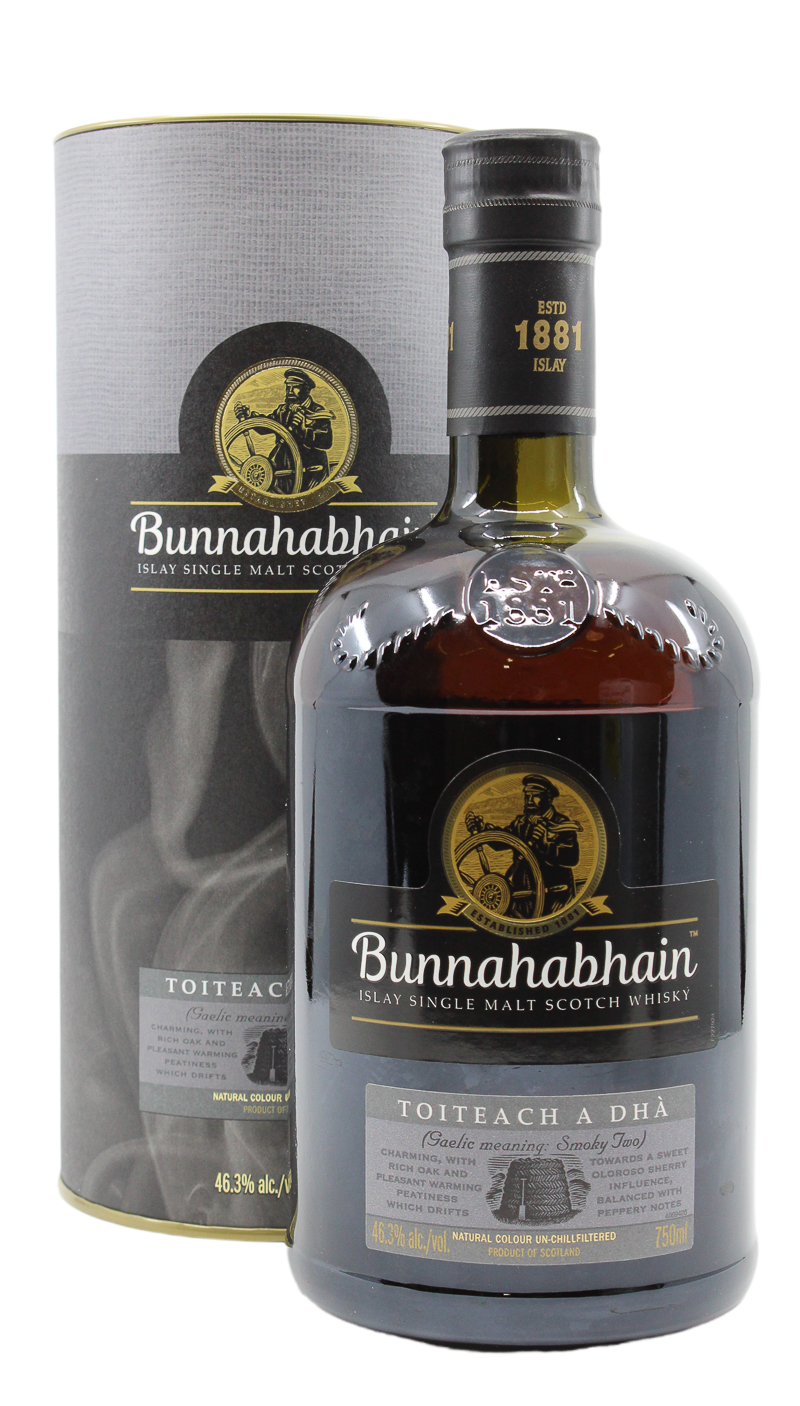
$101.99
As if 'Bunnahabhain' wasn't hard enough for most people to pronounce, Islay's great underdog of a distillery releases a whisky with a name guaranteed to tie your tongue in knots. Toiteach a Dha - pronounced 'Taw-check-a-gah' - is a peated expression that replaces both its forerunner (Toiteach) and the beloved Ceobanach. The name actually means "Smoky Two," which refers to the fact that this is considered a sequel to the original Toiteach. This time 'round, though, they've amped up the sherry influence, so fans can expect a smashing together of Bunnahabhain's house styles: sharp, clean young peat and rich creamy sherry. 46.3% abv
