
Newsletter
Sign up for our newsletter for information on our latest products and promotions.
Sign up for our newsletter for information on our latest products and promotions.

Please confirm that you are of legal age
to purchase alcohol in your region.
You currently have an active checkout session
open already, would you like to clear it?


1257 Kensington Road NW
1 (403) 283-8000 / atyourservice@kensingtonwinemarket.com
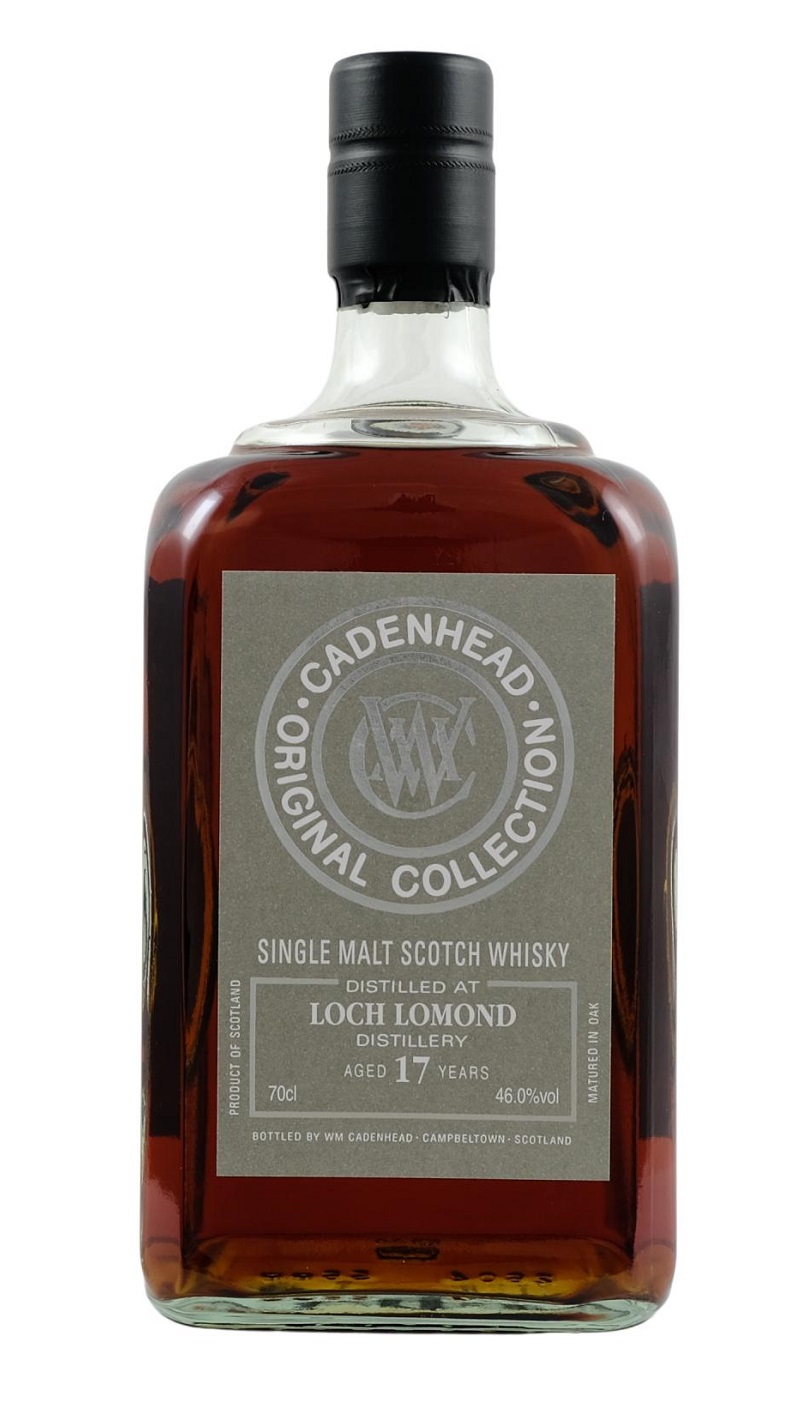
Currently rocking a 87+ point score on Whiskybase, this 17 year old Loch Lomond single malt was distilled in 2005, and was bottled at 46% after maturing in Oloroso Sherry.
700ml mlProducer Tasting Note
Nose: Pear drops, peaches, treacle, nutmeg.
Palate: Pears pouched in red wine, vanilla ice cream with milk chocolate flakes.
Finish: Rich and warming. Orange essence, mulled wine, cloves and dark chocolate.
Originally written by Evan in blog posts for our 2019 and 2020 KWM Whisky Calendars.

Founded in 1965, Loch Lomond is a bizarre operation that is capable of making multiple different styles of spirit all under one roof. It is capable of producing Single Malt, Single Grain, and Blended Whisky entirely at one site. It can and does do this, and it also makes Single Malt in and a wide variety of styles, including both peated and unpeated types.
There are a total of thirteen stills within the Loch Lomond Distillery; however, they are definitely not all the same. Included in this number are your typical swan-neck style pot stills: the type you see at most Scottish distilleries that make single malt whisky. Beyond that though, things get weird. There are also three pairs of straight-neck pot stills, which are sometimes called Lomond stills. One of these pairs has a water cooling system installed on the top of the still that the heated vapour hits before going through the narrowing neck/pipe for collection. This results in much more reflux and leads to a lighter, softer, fruitier spirit being produced.
Finally, there is a six-story Coffey/column still that is actually split in two to accommodate the three-story building it resides in. This still is used to distill malted barley, but due to SWA regulations it still must be called Single Grain spirit in style
With this unusual combination, Loch Lomond Distillery is capable of producing its own blended whisky entirely on-site, without having to source whisky from other distilleries. It is one of the very few (possibly only) active distilleries to be able to do this.
In all, Loch Lomond makes ELEVEN different styles of spirit on a regular basis. For official bottlings, it currently focuses on three styles for regular releases. We are going to taste one of them today. Another point worth mentioning that goes along with this: Loch Lomond also uses a total of three different types of yeast in fermenting the malt. The yeast used is selected based on the style they are looking to create. They of course use a Distiller’s Yeast, which does have different strains but is typically meant to be high yield when it comes to converting sugars to alcohol in the mash. The other two yeasts used are actually meant for wine fermentation though, including one typically used for Chardonnay grapes. The bottom line for all of this is that no matter how strange you think Loch Lomond might be, they have found even more ways to be confounding that we probably don’t even know about yet.
.jpg)
Above: A picture cribbed from Loch Lomond Distillery's website showing a distiller peering into the spirit safe and trying to remember exactly which style of whisky they were producing that day.
The Inchmurrin style made by the distillery is named after the largest island within the Loch itself. At 120 hectares in size, it is the largest freshwater island in the British Isles. The Isle of Inchmurrin – or Mirin’s Island – is named after St Mirin. A monastery built on the island in the seventh century held a chapel dedicated to the Saint, though only ruins now remain.
Inchmurrin bottlings are typically created from whisky produced using straight-necked Lomond stills. They are typified by a light and fruit-forward style in comparison to the fuller-bodied, spicy and lightly peated Loch Lomond and heavily peated Inchmoan releases.
The Inchmurrin style is named after the largest island within the Loch itself. At 120 hectares in size, it is the largest freshwater island in the British Isles. The Isle of Inchmurrin – or Mirin’s Island – is named after St Mirin. A monastery built on the island in the seventh century held a chapel dedicated to the Saint, though only ruins now remain.
The name Inchmoan comes from an Island in the freshwater Loch Lomond. It is low-lying and contains marsh areas, woods, and grassland. It was once a source of peat fuel for the nearby village of Luss. It is currently privately owned, but parts of the small island are used by campers and as a picnic area.
This text is from an article written by Andrew for Celtic Life Magazine in 2017.
As strange as it may sound, it is only in the last three to five decades that most distilleries have seen fit to bottle their own whiskies as single malts. Prior to that, the vast majority of whiskies distilled in Scotland were produced almost exclusively for blends. With few exceptions, most of the available single malts prior to the 1970s were bottled by independent bottlers like Gordon Macphail and WM Cadenhead. Distilleries like Glenfiddich, Macallan, Glenmorangie, Bowmore and Glenlivet began bottling their whiskies as single malts and exporting them globally, in the 1960s. Other distilleries would follow in the 1970s, 80s, and 90s. Some products - like John Dewar & Sons’ “The Last Great Malts” series - have only been launched in the last few years.

Independent bottlings are whiskies bottled by a third party and not the distillery which produced them. Not all distilleries actually bottle their whiskies as single malts and many that do, have limited ranges. Independent bottlings fill this niche in the market, generally releasing single casks and small batch single malts that can vary enormously from the distillery’s core offering. If you are a devoted single malt aficionado, chances are you’ve come across more than a few independent bottlings in your day. If you haven’t yet dipped your toes into the world of independent bottlings, then you may be missing out on some of the world’s finest whisky, and it is high time you took a look at what they have to offer.
The oldest - and one of the finest - of all the independents is WM Cadenhead’s. Established in 1842, Cadenhead’s, as they are affectionately known, is a stubbornly traditional firm, with an exceptional range of whiskies. Along with Gordon Macphail, Cadenhead’s is one of Scotland’s best independent bottlers, with a range of old whiskies that is envied by the rest of the industry. Until the last few years, Cadenhead whiskies were only available from their network of shops in the U.K. and Europe. The Small Batch line was created four years ago to satiate selected whisky specialists around the world, and to distribute the company’s aging overstock.

WM Cadenhead was acquired by J.A. Mitchell & Co. in 1972, the family-owned firm which also owns the Springbank and Glengyle distilleries. After acquiring Cadenhead’s, and its stocks of maturing whisky, Hedley Wright - J.A. Mitchell’s colourful chairman and owner - is said to have spent the next few decades wandering Scotland with his check book. Wright made frequent visits to “his friends” at various distilleries across Scotland, purchasing casks as he went. Hedley kept track of his acquisitions on a series of ledgers, releasing casks bit by bit to the team at Cadenhead’s for bottling. To this day, the firm doesn’t even know the full extent of the casks they are sitting on. However, so long as Hedley keeps the flow of rare and old whiskies coming, Cadenhead’s will continue to be one of Scotland’s most interesting independent bottlers.

Today, Cadenhead’s is headquartered in the scenic coastal town of Campbeltown on the Kintyre Peninsula, within walking distance from its sister businesses, the Springbank and Glengyle (Kilkerran) distilleries. The Cadenhead’s Shop and Whisky Tasting Room serves as a visitor center and retailer for the three brands. They offer daily tours and tastings Monday to Saturday. While Springbank Distillery may be the main draw, the Cadenhead Warehouse tour is not to be missed. Mark and or Cameron will take you into the bowels of a dark, dingy old dunnage warehouse to sample some stunning whiskies, right out of the cask.
 Campbeltown is a bit of a trek, 4 hours by car from Glasgow, near the end of the Kintyre Peninsula. The town is charming, with much to see in the surrounding area, justifying at least a two-day visit. The world-famous Machrihanish Dunes Golf Course is just ten minutes away. In my opinion, Campbeltown is best seen in conjunction with the islands and Arran, Islay (and Jura) over a week-long tour. Caledonian Macbrayne, Scotland’s west coast ferry service, has a special pass for just such a route, called a Hop Scotch. But if Campbeltown is just too far to go, keep your eye open for one of the many other Cadenhead shops in Edinburgh, London, and across Europe. In Canada, Cadenhead Small Batch whiskies can be purchased from Kensington Wine Market in Calgary.
Cadenhead is celebrating its 175th Anniversary in 2017, so let’s raise a glass for their continued good spirits!

$144.99
Bottled at 46%, the Loch Lomond 18 Year was matured in ex-Bourbon Barrels. 90pts Whisky Advocate. Evan also thinks it is very, very good.


$84.99
This 14 year old Loch Lomond was initially matured in American Oak before finishing in Limousin oak. 46%
