Newsletter
Sign up for our newsletter for information on our latest products and promotions.
Sign up for our newsletter for information on our latest products and promotions.

Please confirm that you are of legal age
to purchase alcohol in your region.
You currently have an active checkout session
open already, would you like to clear it?


1257 Kensington Road NW
1 (403) 283-8000 / atyourservice@kensingtonwinemarket.com
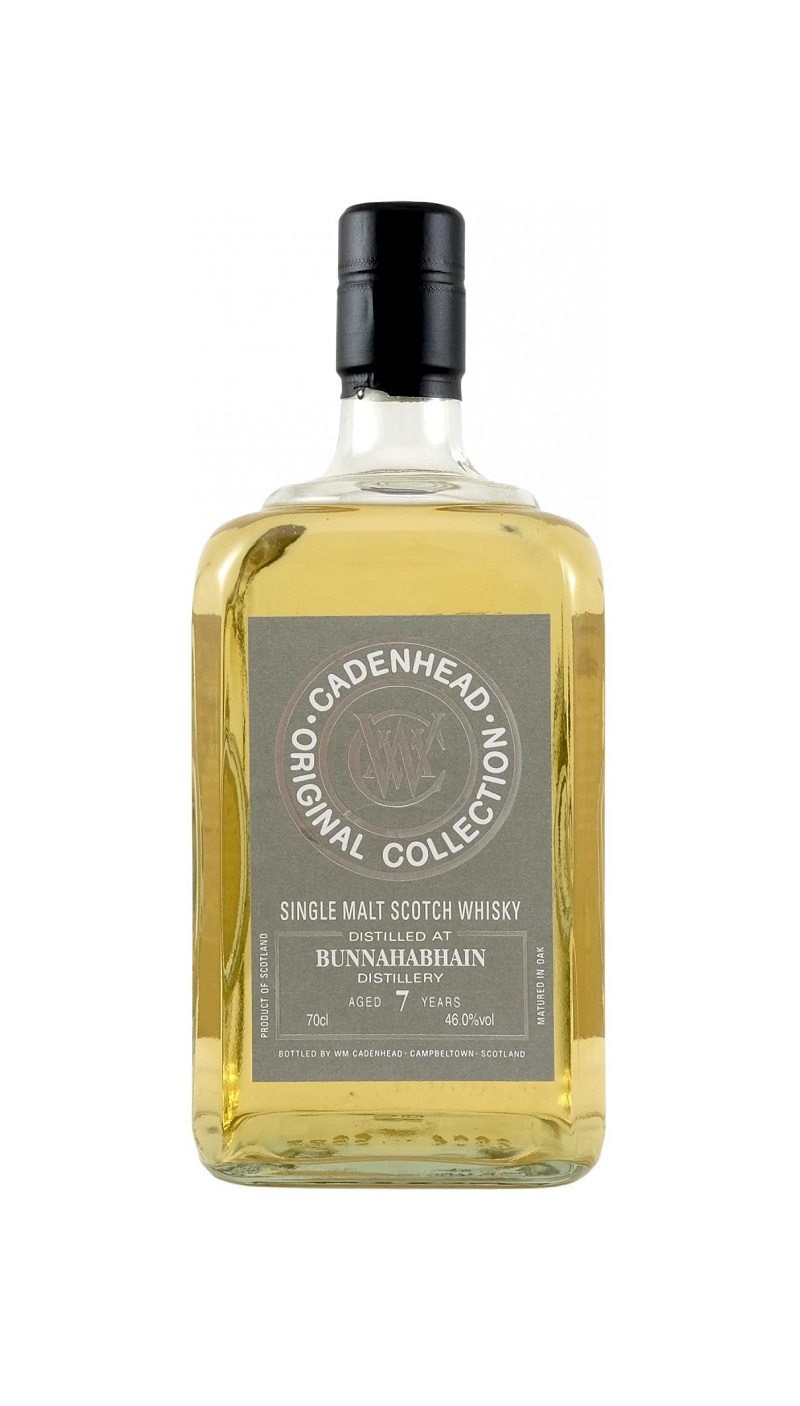
This is a peated young Bunnahabhain, just 7 years of age, bottled by Cadenhead under their Original Collection label at 46%. Matured in ex-Bourbon Casks.
700 mlAndrew's Tasting Note
Nose: orange cheddar on graham waffers and Flint Stone vitamins; very dusty with a touch of latex tubing and black licorice Twizzlers; coastal and briny with lemon and lime zest.
Palate: firm tarry-ashy smoke, juicy malt and briny coastal tones layered over a thick, creamy base of lush oak; lagostimes and smoke mussels; more in the vein of fennel seeds and Goodies than Twizzlers; a sprinking of lemon and lime zest and baked apple.
Finish: medium in length it stays malty with tarry smoke, licorice and more briny coastal tones.
Comment: it is malty, spirit driven, and a touch medicinal; but if that's what you're after, drink em young!
Producer Tasting Note
Nose: Brine, medicinal notes, lobster creels.
Palate: Soft smoke, cured ham, poached pears.
Finish: Flax oil, salted peanuts, smoke continues but doesn’t overpower.
Originally written by Evan for a blog post relating to KWM's 2020 Whisky Calendar.
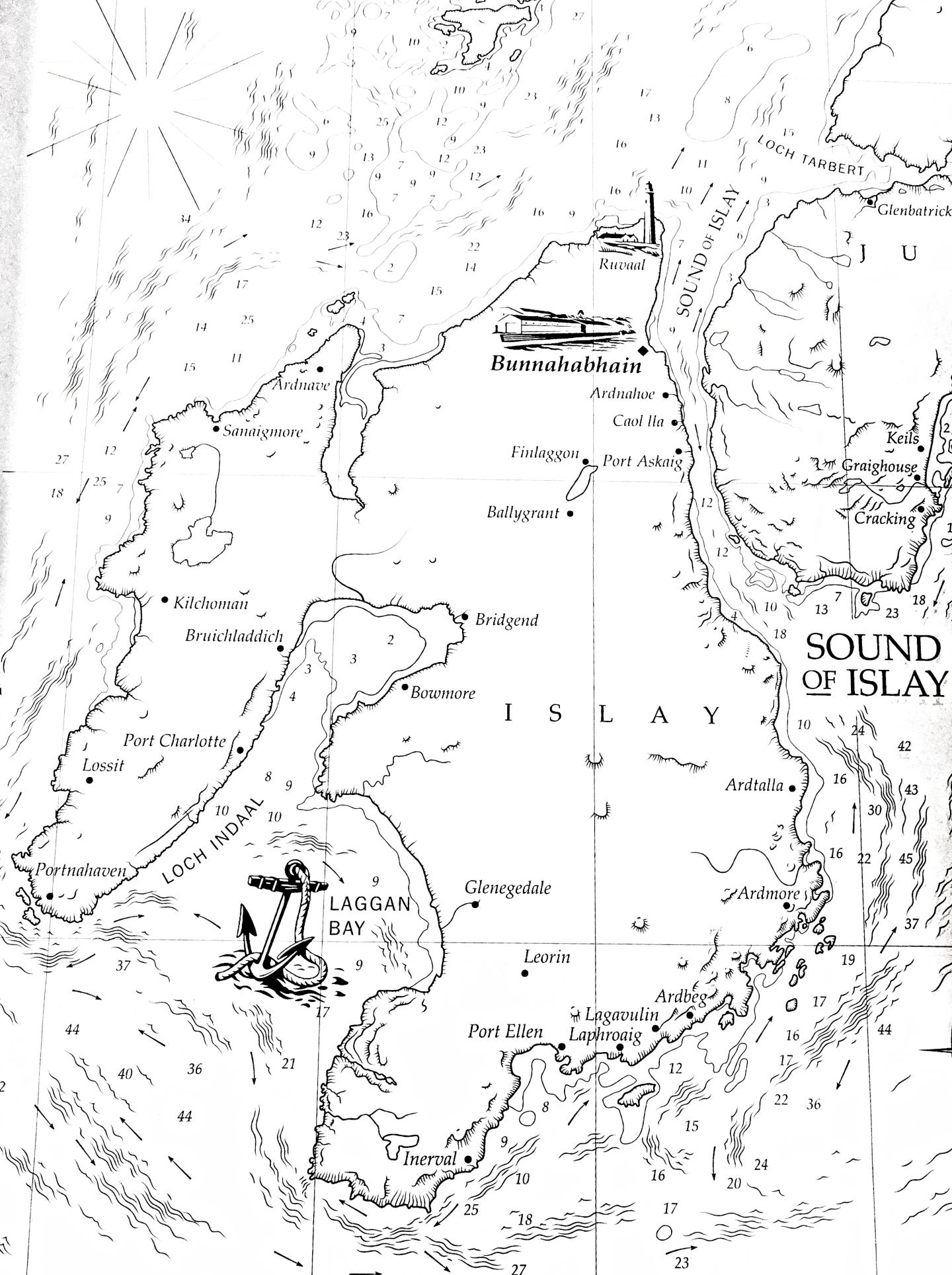
Bunnahabhain Distillery is the northernmost distillery on Islay – it lays off the beaten path and is somewhat remote even when compared to the rest of the island. The distillery was actually only reachable by boat until the 1960s, when a road was finally built to it. Bunnahabhain is one of a trio of Scottish Single Malt Distilleries owned by Burn Stewart (Distell Group).
Burn Stewart and its parent company also own Tobermory Distillery on the Isle of Mull which we discussed on both on Day Four and Day Seventeen. and Deanston Distillery which resides on the Scottish mainland in Perthshire. Like its siblings, most of the flagship single malts Bunnahabhain range are bottled unchill-filtered and with no added colouring at the curious but commendable strength of 46.3% ABV.

Like many Scottish distilleries, Bunnahabhain is a Gaelic name. It translates to "the foot of the river".
This Islay distillery was founded in 1881 and started its life making the heavily peated whisky that the region is famous for. For most of its history its whisky was exclusively used in blends such as Black Bottle, and even today only a fraction of its production is bottled as a single malt. In 1963 production was increased and at the same time the distillery’s style was changed to the lighter, unpeated single malt whisky it is known for today. Since 1997 there have been small amounts of heavily peated (35 PPM malt spec) single malt made each year but it is not what the distillery is known for.
The core of Bunnahabhain’s production and lineup doesn’t show very noticeable peat if it shows at all as they use a malt spec with a maximum phenolic level of 2 PPM. This makes it one of the more gently peated Islay single malts available. The distillery and its whisky are sometimes referred to as the ‘Gentle Giant of Islay’ What it lacks in smoke and peat it typically makes up for in nuanced and complex character and plenty of sherry cask influence, at least in official bottlings.
This text is from an article written by Andrew for Celtic Life Magazine in 2017.
As strange as it may sound, it is only in the last three to five decades that most distilleries have seen fit to bottle their own whiskies as single malts. Prior to that, the vast majority of whiskies distilled in Scotland were produced almost exclusively for blends. With few exceptions, most of the available single malts prior to the 1970s were bottled by independent bottlers like Gordon Macphail and WM Cadenhead. Distilleries like Glenfiddich, Macallan, Glenmorangie, Bowmore and Glenlivet began bottling their whiskies as single malts and exporting them globally, in the 1960s. Other distilleries would follow in the 1970s, 80s, and 90s. Some products - like John Dewar & Sons’ “The Last Great Malts” series - have only been launched in the last few years.

Independent bottlings are whiskies bottled by a third party and not the distillery which produced them. Not all distilleries actually bottle their whiskies as single malts and many that do, have limited ranges. Independent bottlings fill this niche in the market, generally releasing single casks and small batch single malts that can vary enormously from the distillery’s core offering. If you are a devoted single malt aficionado, chances are you’ve come across more than a few independent bottlings in your day. If you haven’t yet dipped your toes into the world of independent bottlings, then you may be missing out on some of the world’s finest whisky, and it is high time you took a look at what they have to offer.
The oldest - and one of the finest - of all the independents is WM Cadenhead’s. Established in 1842, Cadenhead’s, as they are affectionately known, is a stubbornly traditional firm, with an exceptional range of whiskies. Along with Gordon Macphail, Cadenhead’s is one of Scotland’s best independent bottlers, with a range of old whiskies that is envied by the rest of the industry. Until the last few years, Cadenhead whiskies were only available from their network of shops in the U.K. and Europe. The Small Batch line was created four years ago to satiate selected whisky specialists around the world, and to distribute the company’s aging overstock.

WM Cadenhead was acquired by J.A. Mitchell & Co. in 1972, the family-owned firm which also owns the Springbank and Glengyle distilleries. After acquiring Cadenhead’s, and its stocks of maturing whisky, Hedley Wright - J.A. Mitchell’s colourful chairman and owner - is said to have spent the next few decades wandering Scotland with his check book. Wright made frequent visits to “his friends” at various distilleries across Scotland, purchasing casks as he went. Hedley kept track of his acquisitions on a series of ledgers, releasing casks bit by bit to the team at Cadenhead’s for bottling. To this day, the firm doesn’t even know the full extent of the casks they are sitting on. However, so long as Hedley keeps the flow of rare and old whiskies coming, Cadenhead’s will continue to be one of Scotland’s most interesting independent bottlers.

Today, Cadenhead’s is headquartered in the scenic coastal town of Campbeltown on the Kintyre Peninsula, within walking distance from its sister businesses, the Springbank and Glengyle (Kilkerran) distilleries. The Cadenhead’s Shop and Whisky Tasting Room serves as a visitor center and retailer for the three brands. They offer daily tours and tastings Monday to Saturday. While Springbank Distillery may be the main draw, the Cadenhead Warehouse tour is not to be missed. Mark and or Cameron will take you into the bowels of a dark, dingy old dunnage warehouse to sample some stunning whiskies, right out of the cask.
 Campbeltown is a bit of a trek, 4 hours by car from Glasgow, near the end of the Kintyre Peninsula. The town is charming, with much to see in the surrounding area, justifying at least a two-day visit. The world-famous Machrihanish Dunes Golf Course is just ten minutes away. In my opinion, Campbeltown is best seen in conjunction with the islands and Arran, Islay (and Jura) over a week-long tour. Caledonian Macbrayne, Scotland’s west coast ferry service, has a special pass for just such a route, called a Hop Scotch. But if Campbeltown is just too far to go, keep your eye open for one of the many other Cadenhead shops in Edinburgh, London, and across Europe. In Canada, Cadenhead Small Batch whiskies can be purchased from Kensington Wine Market in Calgary.
Cadenhead is celebrating its 175th Anniversary in 2017, so let’s raise a glass for their continued good spirits!
$83.99
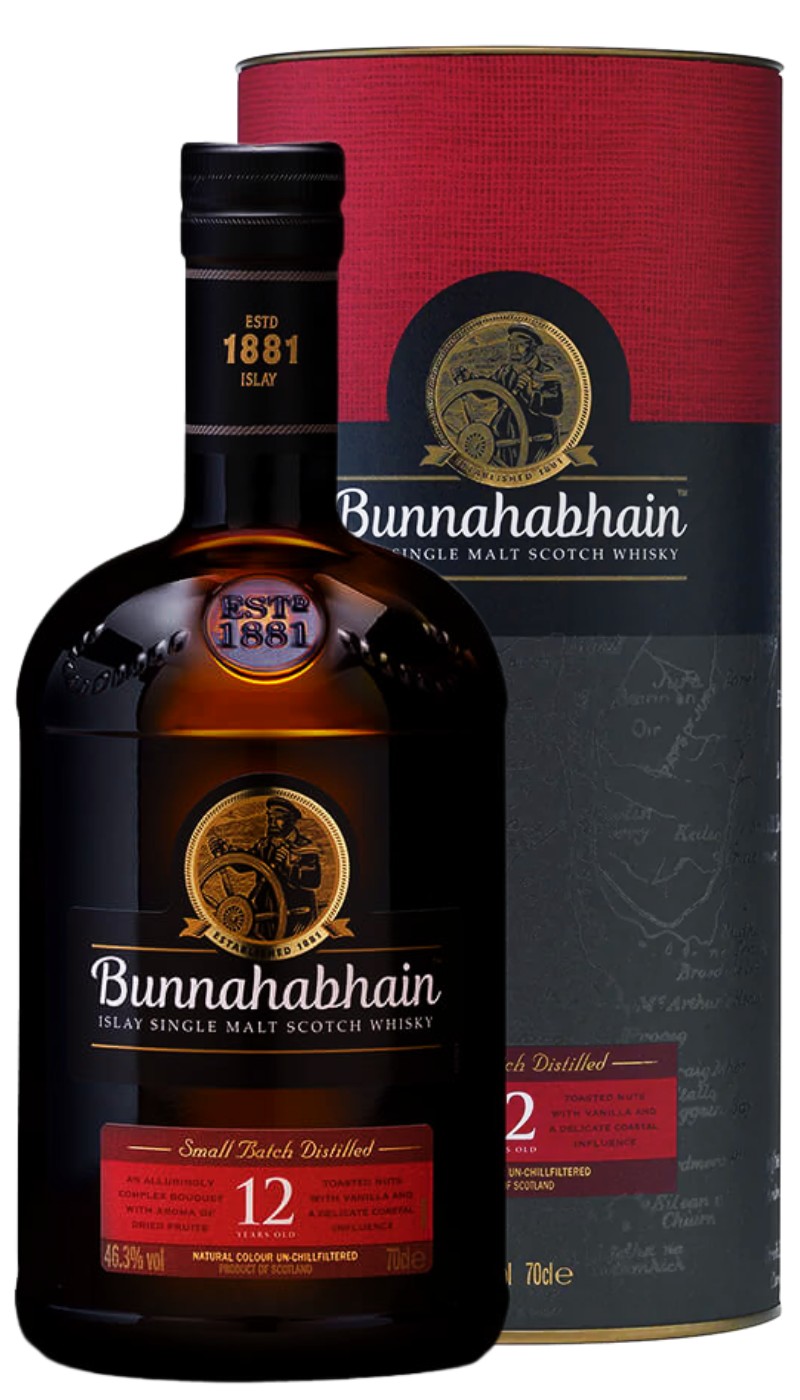
A few years back Bunnahabhain bumped their strength up to 46.3%, bottling it without colouring or chill-filtering. This is the entry level bottling of the Bunnahabhain Distillery, known as the "Gentle Giant of Islay." Bunnahabhain's whisky is generally unpeated, bucking the trend of most Islay distilleries, though it does also produce peated malts. Bunnahabhain is the anchor whisky of the Black Bottle Blend.
Producer Description
"As the original member of our current Core Range, Bunnahabhain 12 Year Old holds a special place in our hearts. First launched in 1979, the Bunnahabhain 12 year old has endured almost 40 years, thanks to the passion and dedication of our distillery team, not to mention the love and support from our fans and friends around the world.
"Our 12 Year Old has set the tone and the benchmark for the rest of the range – only the best will do. Double Matured in Ex Bourbon and Ex Sherry Casks, this whisky is beautifully rich and full-bodied, achieving the perfect balance of the characteristic nutty and sherry flavours of Bunnahabhain."


$72.99
Limit 1 Per Customer!
Bottled at 46.3%, This unpeated release from Bunnahabhain was matured in a combination of in first and second fill Sherry Casks.
Producer Description
"Stiùireadair (pronounced ‘stew-rahdur’ and means ‘helmsman’ in Scots Gaelic) is the latest member of the Bunnahabhain crew. With a brackish, coastal tinge, this sherried malt will transport you to Bunnahabhain bay, with a smattering of sea spray and dried fruit lingering on your lips."

$69.99
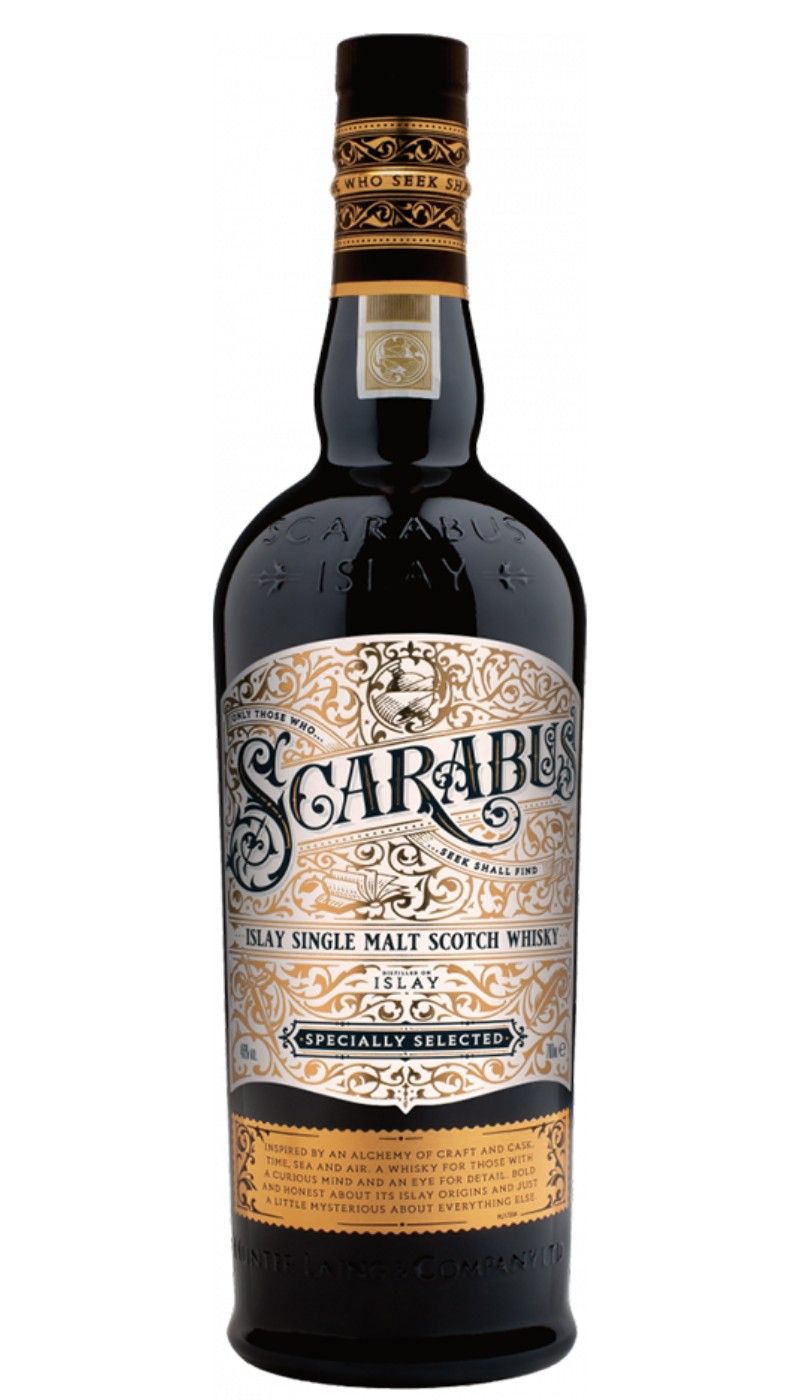
The Scarabus was featured on Day 8 of our 2021 KWM Whisky Calendar
Scarabus is a new single malt from Hunter Laing, the owners of the new Ardnahoe Distillery. The whisky is sourced from an undisclosed Islay distillery, as it will be years until Ardnahoe's whisky comes of age. Launched in May on Islay at Feis Isle 2019. The name of the whisky can be traced back to the 13th century, and means "A rocky place" in Norse. Bottled at 46% without colouring or chill-filtering. Tastes like peated Bunnahabhain.