
Newsletter
Sign up for our newsletter for information on our latest products and promotions.
Sign up for our newsletter for information on our latest products and promotions.

Please confirm that you are of legal age
to purchase alcohol in your region.
You currently have an active checkout session
open already, would you like to clear it?


1257 Kensington Road NW
1 (403) 283-8000 / atyourservice@kensingtonwinemarket.com
IT IS HERE!
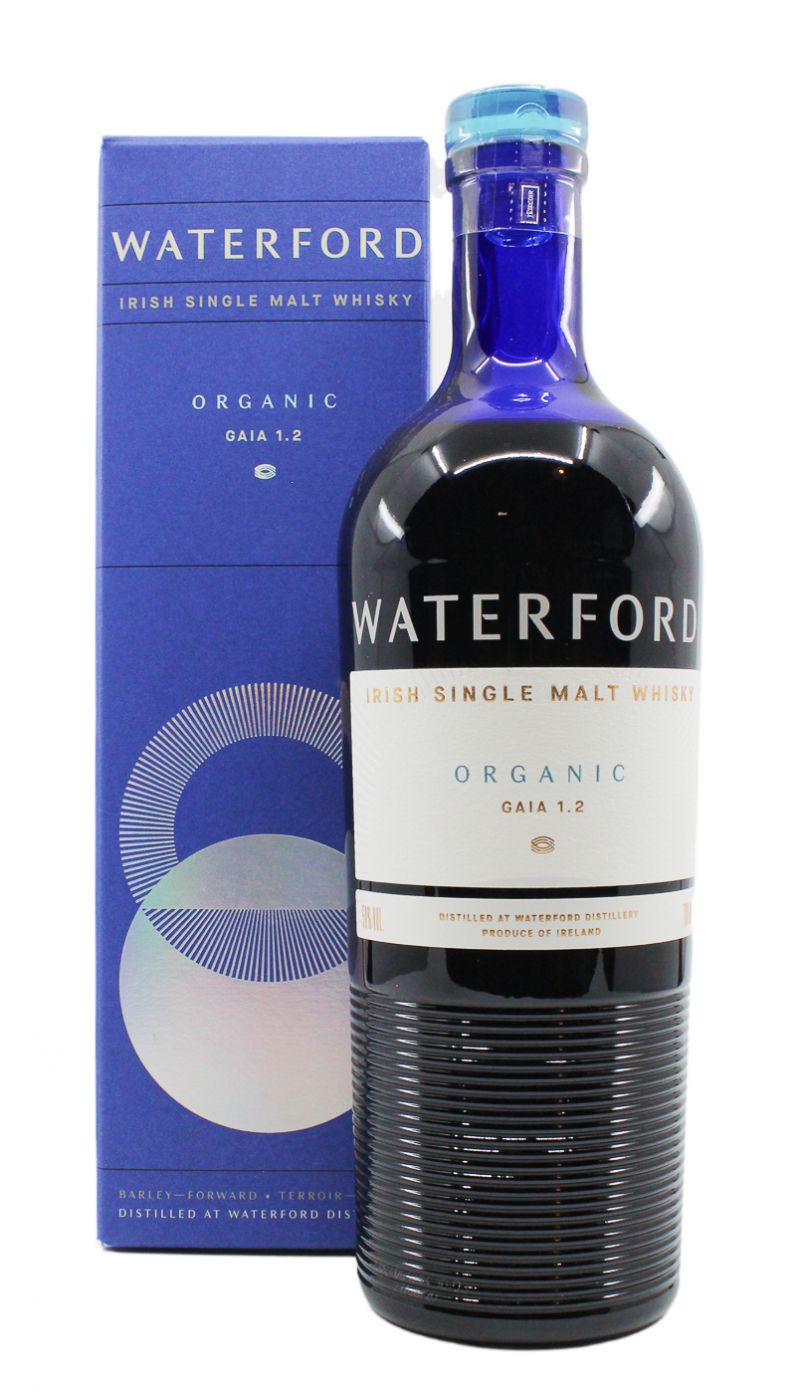
This second organic release of Waterford single malt was produced from Overture barley, grown in 3 distinct soil types, from a number of different farms. Mauri Distiller's Yeast was used for the 136 hour fermentation with the spirit matured in a mix of 35% First Fill ex-Bourbon, 29% Virgin American Oak, 17% ex-French Wine & 19% Vin Doux Naturel Casks. The whisky was bottled at 50% after 3 years, 9 months and 20 days of maturation.
Producer Tasting Note
Nose: a rose bed after a summer shower, white pepper, rhubarb tart, salted caramel, popcorn, fudge, marshmallows, cherries, vine tomatoes.
Taste: white pepper, orange zest, almond, dates, lemon sherbet, liquorice, gentle maltiness and warm chocolate brownie.
Finish: warm spices that gently goes to leave a cherry biscuit note.
More Aboutthe Waterford Organic Arcadian Series
The Arcadian Series represents our otherworldly garden of delights. We sought out maverick farmers, inspirational growers, iconoclasts whose ethos & way of life respects the land & the old ways in the pursuit of pure flavours over yield imperatives. Gaia, the neopagan goddess of yore, a personification of Mother Earth herself, is a fitting custodian to bring forth Ireland’s first whisky distilled from certified organic Irish barley.
John Mallick, Paddy Tobin, Alan Jackson, Pat and Denis Booth, Jason Stanley and Trevor Harris rose to the challenge laid down by us to produce the first Irish-grown organic malting barley. Given the low yielding of organic barley, it is important to note that we combined these crops together as one batch prior to distillation.
When we started the organic project in 2015, the volumes of Irish organic malting barley from any one farm were so small there was no possibility of distilling them as a Single Farm Origin. We took all we could get our hands on to arrive at the minimum useable volume for the maltings. In the years to come we will have we have organic Single Farm Origins to release in the years to come.
We find it bemusing that much of the industry treats with indifference the primary source of single malt whisky’s extraordinary flavour: barley. We have placed barley – where and how it is grown – at the heart of what we do, curious about where the real whisky flavour may be found. A natural progression of this philosophy is to see what not only single farm origins can accomplish but what organically grown barley can do when it is given the right platform. Compliance for organic status is not straight forward by any means – there’ s a shed load of hoops to jump through, deep cleaning regimens, audits and assessments to undergo.
So, is it worth it? We certainly think so, what we lose in yield and hair pulling we gain in purity and definition of flavour. We’re not playing at it; we lay down 400 to 600 casks of organic spirit a year, we buy all the Irish grown organic malting barley that can get our hands on.
700ml mlThe following was written by Andrew Ferguson for the April 2021 Edition of Celtic Life Magazine
The Irish whiskey industry is going through a renaissance at the moment, and no distillery better exemplifies this than Mark Reynier’s Waterford Distillery.

Waterford was opened in 2015, in the recently decommissioned Waterford Brewery, in the town of the same name, about 100 miles south of Dublin. The original brewery opened in 1792 but was replaced in 2004 with a state-of-the-art facility built by Diageo at huge expense to brew Guinness. It was closed in 2013, with the site put up for sale after Diageo opened yet another massive new brewery at St. James Gate in Dublin. And that is where Mark Reynier enters the picture.
Before we wade into the deep end of Waterford, we need to first touch on Bruichladdich, the plucky distillery on Scotland’s west coast Isle of Islay. Bruichladdich, which originally dates to 1883, was in a sorry state at the end of the 20th Century. In 2000, the distillery was purchased by Murray McDavid, an independent bottler headed by Mark Reynier, a former London wine merchant. When Bruichladdich was brought back to life a lot of focus was put on barley, terroir, and cask selection. Since its revival in 2000, Bruichladdich has only ever made whisky with Scottish barley, and has managed to source up to 40 per cent of its annual production from Islay - a considerable feat considering the stormbattered island is not exactly ideal for cultivating barley. Bruichladdich worked closely with local farmers to achieve this. Reviving Bruichladdich wasn’t easy, but in 2012 the distillery was sold to Remy Cointreau for an impressive £58,000,000.00.

Mark did not want to sell as he was just starting to see the fruits of his labours at Bruichladdich. His passion and curiosity about the role terroir played in whisky was born during his time in the wine trade. But in 2012 he found himself looking for a new challenge, still full of passion, and with some capital in hand. In 2015, along with some investors, Mark bought the old Waterford Brewery from Diageo, and began converting it into a distillery. That same year he began sourcing barley from Irish farms, playing close detail to what they creatively call Téireoir; a blend of the French word terroir and Éire, the Irish word for Ireland. Impressively the first spirit trickled off the stills in January of 2016.
The distillery takes barley and téireoir very seriously, storing the production from individual farms and harvests separately. The distillery tracks huge amounts of data on all of its barley, including the soil and growing conditions. They even employ their own fulltime agronomist to analyze the data to see how the terroir influences flavour development. Waterford is uniquely outfitted with a wet mill and a mash filter, pieces of equipment found in few other malt whisky distilleries, but which may be huge assets. The distillery employs a long fermentation by industry standards, tweaking it depending on the barley’s traits.
Distillation is also slow and precise, resulting in a very fruity spirit with distinct profiles to reflect the barley and its téireoir.
The whisky is matured in only fresh oak, including a mix of ex-Bourbon, Virgin American Oak, ex-French Oak wine barriques, and Mark’s prized Vin Doux Naturel casks.
The first Waterford whisky was launched in March of 2020, just as the COVID-19 pandemic was taking hold. The distillery wasn’t able to give its whisky the launch they wanted, but it has quickly caught on internationally, garnering high praise from respected critics and experts. Over the last year Waterford has released at least two dozen different whiskies, mostly Single Farm Origin Single Malts, each produced from a single harvest at a single Irish farm. There have also been two releases of the “Arcadian Series Organic Gaia” single malts, as well as their first Cuvee called Lómhar, which is Irish Gaelic for ‘gem.’

I had the pleasure to visit Waterford in early March last year, just before the world turned upside down. It was nice seeing Mark Reynier again, whom I have known for nearly two decades from his time at Bruichladdich. The distillery is impressive, both technically and aesthetically, with a great team. Waterford is a distillery to keep your eye on; the spirit it is producing is world class, and they are filling it in to good quality wood. While I am not yet a true believer in the concept of barley terroir, I do think Waterford is following a recipe for success. High quality barley, long fermentations and precise distillations combined with a great wood policy is as good recipe for world class whisky as I can think of, and the proof is in the pudding. The first whiskies may be young, but they are excellent!

Waterford Distillery can be visited, but only by appointment. The whisky is currently available in Alberta and British Columbia in Canada, as well as in a handful of American states.

$57.99
Finally, full-size portions of Two Stacks have hit our shelves. The First Cut is a rather complicated five-part blend that pulls together a few styles, grains, and cask types. In fact, this may be one of the most interesting bits of Irish alchemy we've ever seen. The good people at Two Stacks say that this one is made from Virgin Oak Grain, Ex-Bourbon Grain, Ex-Oloroso Pot Still, Ex-Bourbon Double Distilled Malt and Ex-Bourbon Peated Malt. 43% and non chill-filtered.
Interesting side notes: This is one of the first whiskies we have received that we know was sourced from The Great Northern Distillery in Louth, Ireland. The distillery was founded by John Teeling in 2015. John Teeling previously owned and operated the Kilbeggan Whisky Company (Cooley and Kilbeggan Distilleries) until selling the company to Beam Global (Now Beam Suntory) in late 2011. John's sons Jack and Stephen Teeling founded the Teeling Whisky Company in 2012 and opened a distillery with the same name in Dublin.

