
Newsletter
Sign up for our newsletter for information on our latest products and promotions.
Sign up for our newsletter for information on our latest products and promotions.

Please confirm that you are of legal age
to purchase alcohol in your region.
You currently have an active checkout session
open already, would you like to clear it?


1257 Kensington Road NW
1 (403) 283-8000 / atyourservice@kensingtonwinemarket.com
SOLD OUT!
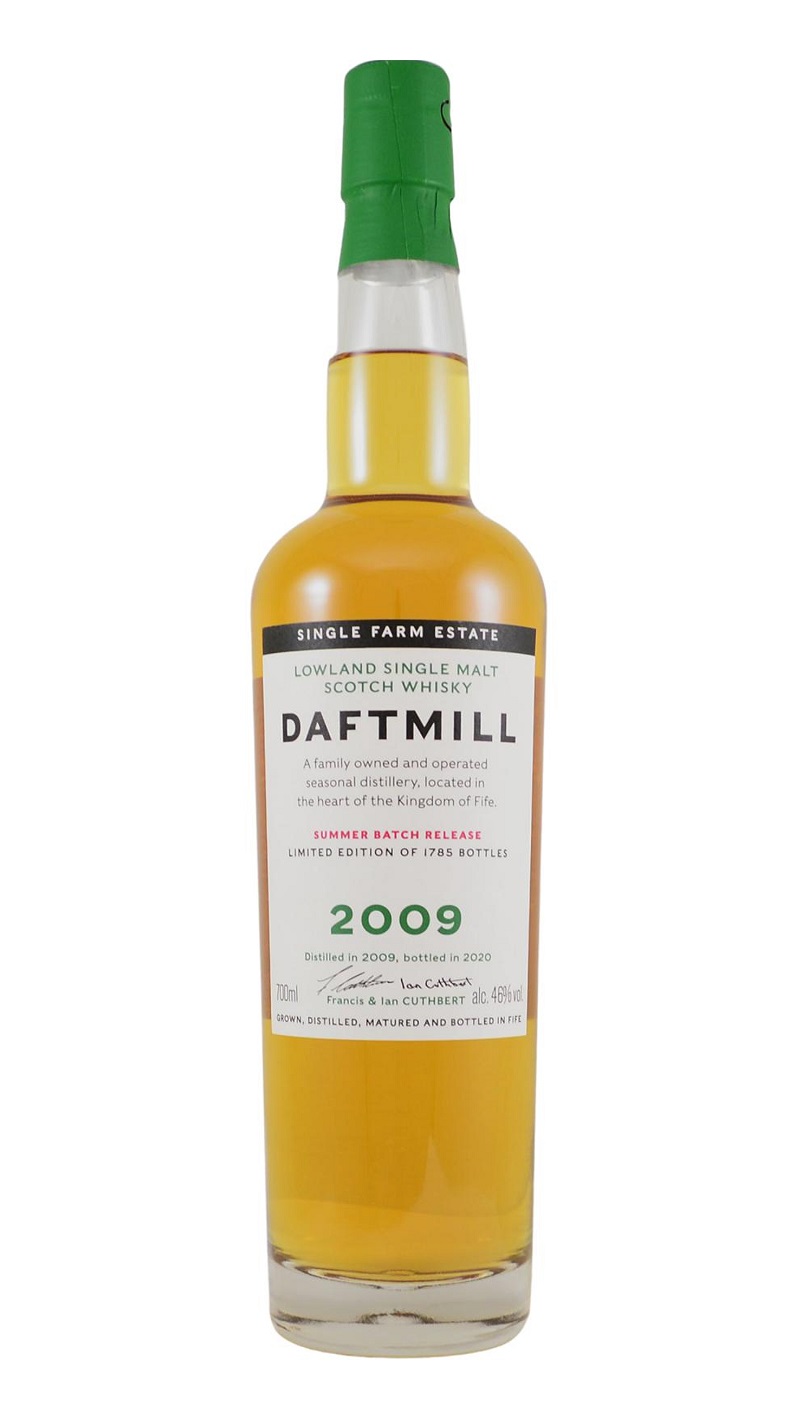
So this is exciting... we're the first store in Canada to get whiskies from Daftmill. The 2009 Summer Batch Release was bottled in 2020 after 11 years at 46%. The "Asia Release" is limited to just 1790 bottles with a tiny fraction of that coming to Canada. Matured in ex-Bourbon and First Fill Ex-Sherry.
Producer Bottling Notes
"Daftmill is a farm distillery. Owned and operated by the Cuthbert family, it only runs in the farm’s quiet periods; mid-summer and winter, sometimes producing as few as 100 casks per year. When not distilling, Francis Cuthbert looks after the estate, growing the malting barley used to make this Lowland whisky. The barley variety Optic was grown in the South fields and harvested in the last week of August 2006. It was then stored on the farm to be malted in Alloa during the summer of 2007. This first fill ex oloroso butt and four ex bourbon barrels that make up this bottling were distilled and filled in June and July 2009. This is our first release to contain whisky matured in both bourbon and sherry casks. Cask 016/2009, 020/2009, 022/2009, 023/2009 & 027/2009."
700ml ml
Andrew's Tasting Note
Nose: thick, honeyed and fruity; there is something old-school about the nose, heading into lactic territory; dewy flours on a warm summer morning, soft melons and tart citrus; very decadent, a touch of leather and tobacco.
Palate: bright, fruity and sweet with a velvety coating texture; more melons, citrus, and now some pineapple, apricot, and figs too; getting into tropical fruit territory; creme brule and dulce de leche; very creamy with floral vanilla and malted milk; a touch of chocolate, leather and tobacco as it evolves; subtle malt. warming spices and bakery tones.
Finish: long, coating, and smooth with warming spices and more velvety oak; layered and elegant.
Comment: this is quite simply a lovely whisky, and well worth the wait; it is old school with a lush, layered, and complex profile; what is most surprising to me is how subtle the malt is for its age; very well put together.
Producer Tasting Note
"The nose is initially quite shy, and this dram benefits from a little breathing time in the glass, those with patience are rewarded with a harmoniously balance of fresh tropical fruit reminiscent of mango and cola cubes with thicker aromas of dried figs and cigar boxes. The palate is wonderfully spicey giving notes of clootie dumpling and lemon zest developing into something smoother with toffee notes and Fraserburgh butteries. The finish is exceptional with the ex-sherry casks really shining through and waves of fresh fiery gingerbread lingering."
The following was written by Andrew Ferguson for the April 2020 edition of Celtic Life Magazine.
Until the closing decades of the 19th century, most Scottish distilleries had started out as farms. Some were blessed with fertile fields, perfect for growing barley, while others got their start with cattle farming. Many did both. Either way, some discovered in due course that it was much more profitable to use malted barley to make whisky than it was to be a simple farmer. By the 1700s, there were literally tens of thousands of illicit stills across the highlands of Scotland, most of them belonging to farms and small crofts. By 1820, as many as 14,000 illicit stills were being confiscated each and every year.
.jpg)
There is an interesting synergy between the two - farming and malt whisky making - that goes well beyond the obvious. Barley has been Scotland’s most important cereal crop for centuries. The grain is not only well suited to grow in the nation’s cool, damp northern climate, but it is also very stable. Scotland’s barley production continues to be the bedrock of its whisky and livestock industries, but the grain has a catch; it stores its energy in the form of starch, and before you can feed it to cattle and sheep, the grain needs to be modified. The best way to do this is to first use the barley to make beer or whisky.
The first step of the brewing and malt whisky making process is malting. By steeping it in water, and then leaving it to breathe, the grain is tricked in to thinking it is spring, starting the process of germination which converts the starches to sugars. When the sugar yield is at its maximum, the process is stopped by drying the now-malted barley out. The grain is then milled, and the sugar extracted by sparging hot water through it. The sugary water, or wort, is then fermented to become beer or whisky. The leftover spent grains are now rich in protein and slightly sweet, making them perfect animal feed.

In 1823, the Excise Act was passed in Scotland, reducing the size of legal stills and, more importantly, the duties levied on small distillers. Nicknamed the “Small Stills Act,” it encouraged small scale distillers - mostly farmers - to go legit. Almost all the malt whisky distilleries founded before the last two decades of the 19th century began as farms. This only started to change in the 1880s, with the explosion in demand for malt whisky brought on by the collapse of Europe’s wine industry.
Flash forward more than 100 years, and the Scotch whisky industry is a very different animal.
Many new distilleries have opened in the last decade. As with the modern industry as a whole, few of them retain a direct link to farming, other than the need for barely as a base ingredient. One curious exception is Daftmill Distillery, established by Francis Cuthbert in Fife, in 2003. The distillery was built in two-hundred-year-old farm buildings, in the fertile Eden Valley. The land has been farmed for more than a thousand years, by just 3 families, and specializes in growing malting barley for the whisky industry. For the last 15 years they have held back about 10 per cent of their annual barley harvest so that it may be used in the production of their own whisky. Oh, and they also raise cattle!

Daftmill’s production is small, just 20,000 litres-per-year - less than 1/1000th of what Glenfiddich or Glenlivet produce over the same period. As with the farm distilleries of the 18th and 19th centuries, whisky production has to be scheduled around the farm’s main enterprise, and it is restricted to two three-month windows following the Spring and Fall harvests. Unlike most of the other new Scottish distilleries to open in the last decade, Daftmill was not in a rush to get its product to market. Both the distillery and its annual whisky production are financed from the farm’s profits. Francis Cuthbert was determined not to release his first whisky until it was well and truly ready. This came to pass in 2018 when the first bottling, a 12-year-old, was released and sold by ballot.
One of the best descriptions that I have seen of Daftmill Distillery is that it is Scotland’s oldest new distillery, at the forefront of the modern Scottish distilling boom along with Kilchoman Distillery on Islay. The two started production just a few months apart in 2005, and both are situated on barley farms. But the similarities end there. Kilchoman started releasing its whisky in 2008, to finance ongoing production, and it also happens to operate a farm to supply some of its production. Daftmill is a farm distillery, in the model of those of the 19th century - it is a farm that just happens to make whisky.

Daftmill Distillery is located about 30 minutes from St. Andrews in the bucolic countryside of the Howe of Fife. A working farm, there is no visitor center, and the distillery is not open to public except by appointment. Nor is the whisky particularly easy to come by; only a handful of bottlings have been released in the last two years, most of them single casks. But there will be more, when Francis feels the whisky is ready!