Newsletter
Sign up for our newsletter for information on our latest products and promotions.
Sign up for our newsletter for information on our latest products and promotions.

Please confirm that you are of legal age
to purchase alcohol in your region.
You currently have an active checkout session
open already, would you like to clear it?


1257 Kensington Road NW
1 (403) 283-8000 / atyourservice@kensingtonwinemarket.com

$54.99
The very early history of the castle Gobelsburg and its vineyards is an unwritten story as with many similar estates in Austria. Archeological excavations in one of our vineyards (Grub) and during the extension of the chateau’s vaults have released many traces of settlements in the Eolithic, bronze and Iron Age, the Roman Empire and early medieval periods. Fast forward to January of 1996 when the estate and its vineyards were acquired by Willi Bründlmayer and Michael Moosbrugger through a long-term lease. Today the estate and winery are managed by Michael. Some of Austria’s finest vineyards belong to Schloss Gobelsburg, these being the vineyards on the terraced Heiligenstein and Gaisberg as well as the hollow site between the two hills, the Grub. The terroir of these hills and hollow sites are very diverse – each exemplifying their unique nuances. The hills have porous rocky soil containing mica-schist and gneiss, as well as basalt in some places on the Heiligenstein. The soil within the hollow is fertile loess 4 to 8 meters deep. On the adjoining lower sites there is loess and loam mixed with some brown and sandy soil. The Gobelsburg plateau which is south of the château, has vineyards that rest upon pebbles and gravel that were transported here by the “early Danube.” Additionally, there is a topsoil of about 0.5 to 1.0 meters consisting of black and loamy soil and loess.
750 ml
OUT OF STOCK
If you'd like us to try to order it, add it to your cart. We can't promise, but we'll do our best!
The most southeasterly part of the Gföhler gneiss plate is marked by slaty para-gneiss, amphibolite and mica. Some parts of the Riesling terraces belong to the oldest vineyards of the winery. They form a very classic, precise Riesling, refined yet intense, with great purity and aging potential.

$89.99
This wine is pressed from a large number of small vineyards at the foot of the Loibenberg. What they have in common is that they are still decisively shaped by the Loibenberg and its eroded weathered rock. There are influences of sand and various sediments found among the vineyards located in the warmest Wachau terraces with an arid and shallow soil lying 200 metres above sea level. They use traditional agriculture in the vineyard and, when the grape reaches its optimum ripeness, it is harvested manually.
Once the grapes reach the winery, they are selected, pressed and left to macerate for about 24 hours. They are then vinified at a controlled temperature with selected yeasts. No oak barrels are used in the process. When it is ready, the Alzinger Riesling Loibenberg Smaragd wine is clarified and filtered. Alzinger Riesling Loibenberg Smaragd is a dry white wine that contains all the delicacy and complexity of the charming Wachau Valley.


$89.99
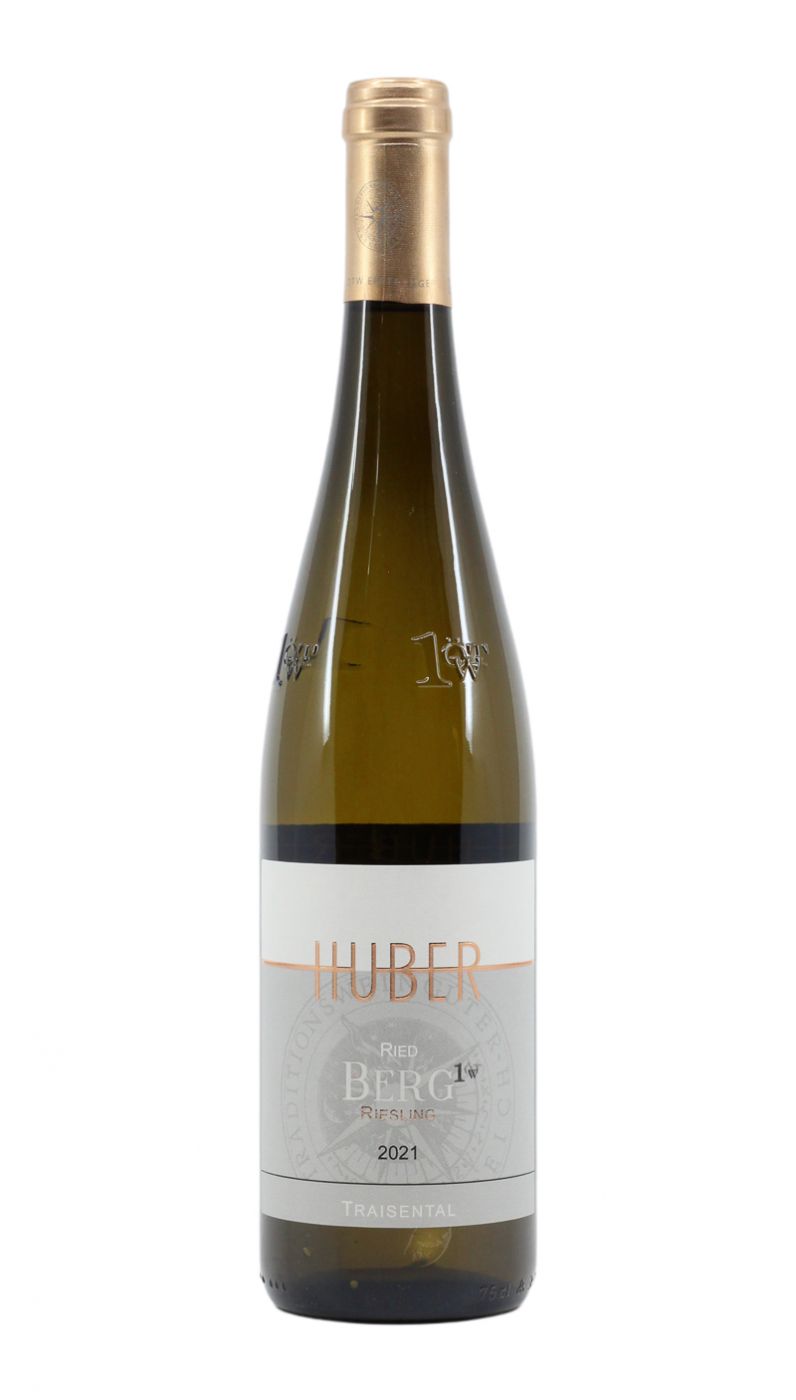
In just a few years, Markus Huber has successfully established his winery as a showcase enterprise in Austria as a wine producing country. His distinctive, top-quality wines, grown on outstanding soils of lime and conglomerate, serve as an example of the very best of the Traisental Valley – full of character, clear in style and site-related minerality. The family’s highest priority is to work without compromise in the vineyards and in the cellar for premium quality. This vineyard occupies a steep, eastfacing, terraced slope with a gradient of more than 25%. The soil, which overlies calcareous conglomerate of the Hollenburg-Karlstetten Formation, is very meager with only a thin layer of humus.

$57.99
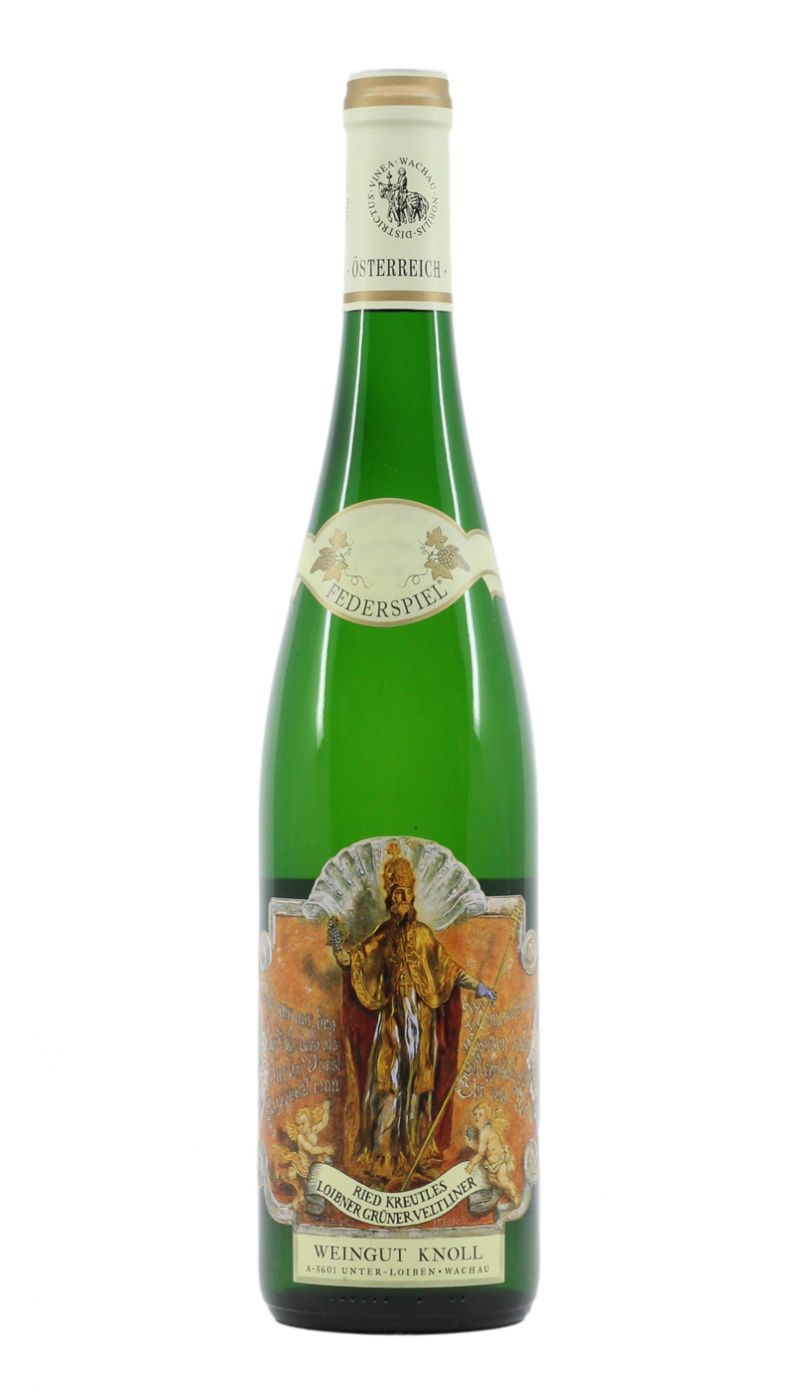
There is hardly another vineyard that has shaped the perception of the Wachau as a serious high-quality wine-growing region as strongly as that of the Knoll family. Many generations of this family have dedicated their lives to growing wine: the first glass bottles were filled with Knoll wine in the 1950s, and the arguably most famous wine label in Austria – the family’s trademark baroque image of Saint Urban – first graced the Knoll wine bottles in 1962.
The family cultivates wine on sixteen hectares, and the names of his terraces have become common knowledge among both national and international wine drinkers: the Kellerberg, Loibenberg, Pfaffenberg and especially the Schütt yield the fruit for the famous range of Knoll Riesling and Veltliner, which are all clear, precise, mineral-rich and structured, frequently revealing their full potential after years or even decades.

$32.99
The story of Bests' begins in 1866 when Henry Best purchased 30 hectares of land in the small town of Great Western, 230km Northwest of Melbourne in New South Wales. It was a property named Concongella, and the goal was to produce world-class wines that would compete with those from France. Fast forward to 1920 when Frederick P Thomson signs a contract of sale with Charles and Joseph Best (Henry Best’s sons), to purchase the Concongella Vineyard. The winery continued to evolve, planting whatever grapes were in fashion, all the while discovering the concept of terroir. By the turn of the century, Syrah is being touted as Australia's adopted grape child, and the varietal thrives over much of Australia's wine regions. In the 1980s the Syrah-based wines are often referred to as Hermitage but the French put an end to that outside of France. Hermitage became known as Shiraz., drawing the name from what is thought to be the grape's Persian origins in Shiraz, Iran. Meanwhile Bests' continues to evolve, acquiring more vineyards and establishing itself as one of Austalia's preeminent Shiraz producers. In 2012 their Bin 1 Shiraz won the Jimmy Watson Memorial Trophy at the Royal Melbourne Wine Show, Australia's most prestigious wine award.